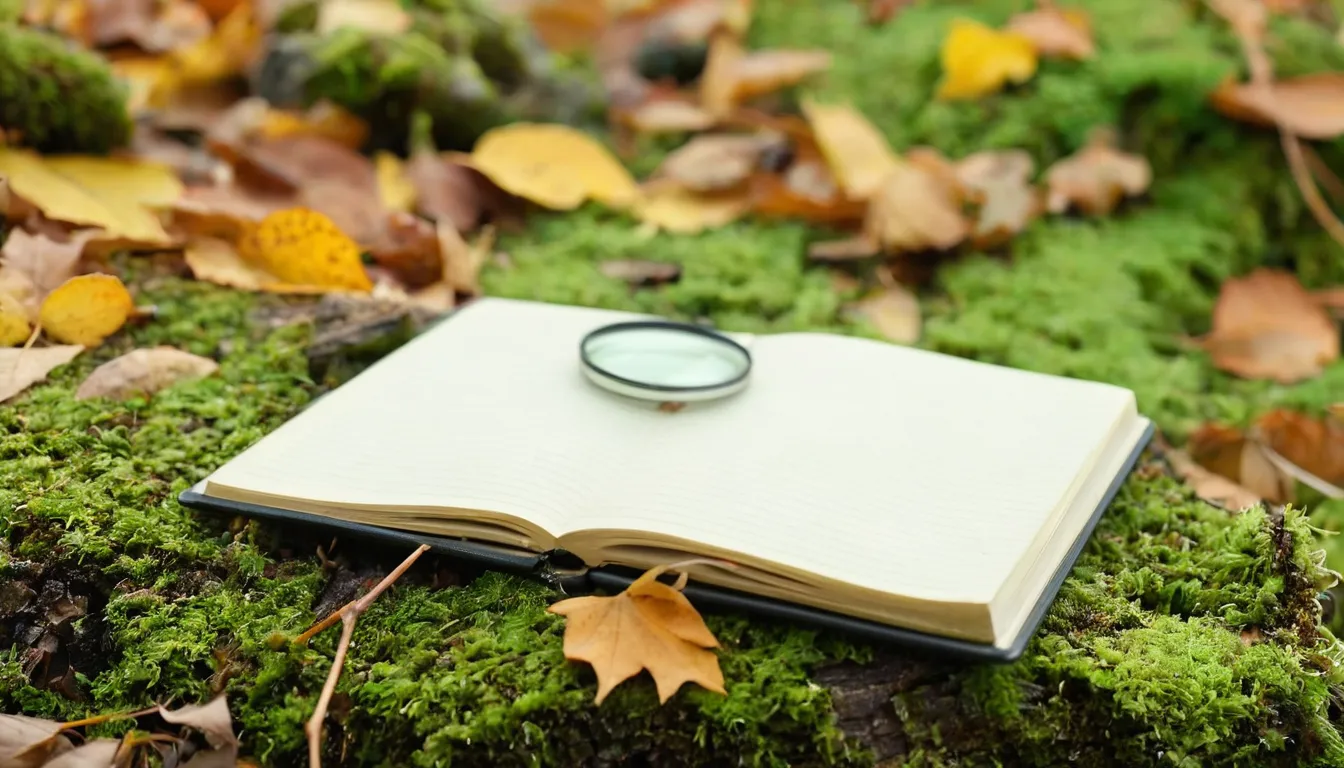
How to observe like a naturalist
- Sit still for a few minutes before you start looking. Animals that hid when you arrived often come back.
- Use all your safe senses: look, listen and feel textures. Don't taste anything you find outside.
- Draw what you see, even roughly. Drawing makes you notice details like leg count or leaf edges.
- Write the date, place, time and weather every time.
The activities
Seed jar
Ages 3 and up, 10 min + 2 weeks, adult nearby
You need
- A clear jar
- Paper towels
- Dried beans from the kitchen, soaked overnight
- Water
Steps
- Line the jar with damp paper towel.
- Slide three beans between the towel and the glass.
- Keep the towel damp, not soaking.
- Check each day and draw what you see.
What's happening: A seed carries its own food supply. With water and warmth it sends a root down and a shoot up. Roots keep growing downward because they respond to gravity.
Safety: Raw dried beans are not for eating, and some kinds are harmful uncooked. Wash hands afterward.
Go further: Once a root appears, lay the jar on its side and watch the root over two days.
Thirsty celery
Ages 4 and up, 15 min + 1 day, adult helps
You need
- Celery stalks with leaves, or white carnations
- Two glasses of water
- Food coloring
Steps
- An adult trims the bottom of each stalk with a knife.
- Add a few drops of color to each glass.
- Stand the stalks in the water.
- Check after a few hours and again the next day.
What's happening: Plants draw water up through thin tubes in their stems. The colored water shows where those tubes run.
Safety: Knives stay with adults.
Go further: After a day, an adult cuts a stalk across so you can count the colored dots, which are the tube ends.
Leaf rubbings
Ages 3 and up, 20 min, adult nearby
You need
- Fallen leaves
- Thin paper
- Crayons with the wrappers peeled off
Steps
- Collect leaves that have already fallen.
- Lay a leaf vein side up under the paper.
- Rub the side of a crayon over it.
- Label each rubbing with where you found it.
What's happening: Veins carry water and food through a leaf. Each kind of tree has its own leaf shape and vein pattern, which helps people tell trees apart.
Safety: Skip plants you don't recognize, and wash hands afterward.
Go further: Sort the rubbings by shape and count how many kinds of trees grow near you.
Bird count
Ages 4 and up, 15 min, adult nearby
You need
- A window or quiet outdoor spot
- A notebook and pencil
- Binoculars if you have them
Steps
- Sit still in the same place for 15 minutes.
- Tally each kind of bird, describing any you can't name.
- Write down the time and weather.
- Repeat on another day.
What's happening: Counts at the same place and time reveal patterns: which birds visit, when, and how that shifts with the seasons. Scientists combine counts from many volunteers in the same way.
Safety: Watch from a distance. Never touch nests, eggs or chicks.
Go further: Count at the same time each week for a month and graph the totals.
Minibeast hunt
Ages 4 and up, 30 min, adult nearby
You need
- A magnifying glass
- A small clear container
- A soft paintbrush
- A notebook
Steps
- With an adult, lift a log or stone so the far edge comes up first.
- Watch without touching for a minute.
- Brush a small creature gently into the container for a closer look.
- Draw it, count its legs, then put it and the log back as you found them.
What's happening: Counting legs is a quick first sort. Insects have six, spiders have eight, and many other small creatures have more.
Safety: Don't pick creatures up by hand. Learn which local animals bite or sting, and wash hands afterward.
Go further: Compare a damp, shady spot with a dry, sunny one.
Look after what you find
Good naturalists leave a place as they found it. Pick only fallen leaves and flowers you are sure are common, return logs and stones gently, and release any creature where you found it within a few minutes. Stay on paths in parks and nature reserves, and check local rules, since some protected areas don't allow collecting at all. If your family wants to share bird or bug sightings with scientists, many countries run community science projects through museums and wildlife groups; your local library or nature center can point you to one.